Avid Reader Bookshop Soiree - Concert Program
You can support NYCA in many ways...
Lending time. Offering in-kind support. Sponsoring a singer. Commissioning a piece.
A donation of any size can make a real difference to the National Youth Choir of Australia. Past support has been used to subsidise accommodation costs for singers, transportation for regional tours, new composition and music scores. Our ongoing fundraising program is dependent on the support we receive from our supporters such as yourself.
The National Choir of Australia (NYCA) is a registered Deductible Gift Recipient (DGR) and all donations over $2 are tax deductible.
Season Finale Concert
Experience the full season program including works by Whitacre, Ešenvalds, Twist, and the world premiere of the winning work of the 4th Ralph Morton Memorial Choral Composition Competition at our finale concert this Saturday!
St Andrew’s South Brisbane - Saturday 11th July 7:30pm
So Let Us Melt – Jessica Curry (2017)
Text: John Donne (1572-1631)
So Let Us Melt by Jessica Curry sets a text by seventeenth-century poet John Donne, drawing on his meditation on love, separation, and spiritual connection. The title comes from Donne’s poem A Valediction: Forbidding Mourning, in which he argues that a deep bond can endure physical distance without loss or grief.
The work is characterised by sustained vocal lines and carefully layered harmonies that allow the text to unfold naturally. Rather than relying on dramatic contrasts, Curry builds the piece through gradual changes in texture and intensity, reflecting the poem’s quiet confidence and sense of unity.
So let us melt, and make no noise,
No tear-floods, nor sigh-tempests move;
'Twere profanation of our joys
To tell the laity our love.
Moving of the earth brings joys and fears,
Careless, eyes, lips, and hands to miss.
Our two souls, which are one.
Though I must go, endure not yet
A breach, but an expansion, Like gold
Such wilt thou be to me.
Thy soul comes home.
though I must go.
And the Swallow – Caroline Shaw (2017)
Text: Psalm 84
And the Swallow (2017) by Caroline Shaw is a setting of verses from Psalm 84, inspired by the image of a swallow finding a safe place to build its nest. The work reflects themes of home, refuge, and belonging, drawing connections between the psalm’s ancient text and contemporary experiences of displacement and longing for safety.
Shaw’s characteristic musical language combines luminous harmonies, flowing vocal lines, and vivid sound imagery. Moments of wordless singing evoke the movement of birds and elements of the natural world, creating an atmosphere that is both intimate and expansive. Though brief in duration, And the Swallow offers a powerful meditation on hope, renewal, and the universal search for a place to call home.
How beloved is your dwelling place,
o lord of hosts,
my soul yearns, faints,
my heart and my flesh cry out.
The sparrow found a house,
and the swallow her nest,
where she may raise her young.
They pass through the Valley of Bakka,
they make it a place of springs;
the autumn also covers it with pools.
Ne Irascaris Domine – William Byrd (2008)
Text: Isaiah 64 v. 9
Published in 1589 during a time of intense religious upheaval, William Byrd’s Ne Irascaris, Domine sets verses from the Book of Isaiah lamenting the destruction of Jerusalem. For Byrd, a devout Catholic living in Elizabethan England, these verses functioned as a deeply personal metaphor for the persecution of his faith.
Ne irascaris, Domine, satis,
et ne ultra memineris iniquitatis nostrae.
Ecce, respice, populus tuus omnes nos.
Civitas sancti tui facta est deserta.
Sion deserta facta est, Jerusalem desolata est.
Be not angry, O Lord, still,
neither remember our iniquity for ever.
Behold, see, we beseech thee, we are all thy people.
The holy cities are a wilderness.
Sion is a wilderness, Jerusalem a desolation.
Legend (Crown of Roses) – Pyotr Ilyich Tchaikovsky (1840-1893)
Text: Book of Wisdom (18:14–15)
Tchaikovsky's The Crown of Roses is a deeply moving and mournful reflection on innocence and sacrifice. Originally from his Sixteen Songs for Children, he later arranged it for unaccompanied voices in 1889. The text follows the boy Jesus tending to his garden of roses, only to be mocked by passing children who strip him of his flowers and weave a crown of thorns instead. Over the years, it has become a staple of sacred choral repertoire.
When Jesus Christ was yet a child
He had a garden small and wild,
Wherein He cherished roses fair,
And wove them into garlands there.
Now once, as summer time drew nigh,
There came a troop of children by,
And seeing roses on the tree,
With shouts they plucked them merrily.
Do you bind roses in your hair?
They cried, in scorn, to Jesus there,
The Boy said humbly: “Take, I pray,
All but the naked thorns away.”
Then of the thorns they made a crown,
And with rough fingers pressed it down,
Till on His forehead fair and young,
Red drops of blood like roses sprung.
O Happy Eyes – Edward Elgar (1889)
Text: Book of Wisdom (18:14–15)
Composed in 1889 shortly after his marriage, Edward Elgar's O happy eyes is a brief a cappella partsong set to a romantic poem written by his wife, Alice. The piece was later revised in 1894 and eventually published by Novello in 1907 as part of the Three Part-Songs, Op. 18 collection. The miniature stands as a direct historical reflection of the couple's early life together and their frequent creative collaborations.
O happy eyes, for you will see
My love, my lady pass today;
What I may not, that may you say
And ask for answer daringly. O happy eyes.
O happy flow'rs that touch her dress,
That touch her dress and take her smile,
O whisper to her all the while
Some words of love in idleness. O happy flowers.
O happy airs that touch her cheek,
And lightly kiss and float away,
So carelessly as if in play,
Why take ye all the joy I seek?
O happy eyes my love to see,
Alas! alas! I may not greet
With word or touch my lady sweet;
More happy eyes, say all for me.
Ascendit Deus – Peter Phillips (c. 1560–1628)
Text: Psalm 47 v.5
Peter Philips’ Ascendit Deus is a brilliant, high-energy Renaissance motet for the Feast of the Ascension. Composed around 1612, it is famous for its lively word-painting, vividly depicting Christ’s triumphant ascent into heaven using soaring vocal lines and trumpet-like fanfares.
Ascendit Deus in jubilatione,
et Dominus in voce tubae. Alleluia!
Dominus in caelo paravit sedem suam. Alleluia!
God is gone up with a shout,
the Lord with the sound of the trumpet. Alleluia!
The Lord hath prepared his seat in heaven. Alleluia!
Jesu, meine Freude – Johann Sebastian Bach (1723) arr. Wessler
Text: Johann Franck (1653)
Johann Sebastian Bach composed the motet Jesu, meine Freude, BWV 227, in 1723. It was written for the funeral of Johanna Maria Käsin, the wife of Leipzig's postmaster, and serves as the earliest and longest of his authenticated motets. The original hymn tune itself dates much earlier, composed by Johann Crüger with text by Johann Franck in 1653, however, stay tuned for a different arrangement!
Jesu, meine Freude,
Meines Herzens Weide,
Jesu, meine Zier,
Ach wie lang, ach lange
Ist dem Herzen bange
Und verlangt nach dir!
Gottes Lamm, mein Bräutigam,
Außer dir soll mir auf Erden
Nichts sonst Liebers werden.
Jesus, my joy,
pasture of my heart,
Jesus, my adornment
ah how long, how long
is my heart filled with anxiety
and longing for you!
Lamb of God, my bridegroom,
apart from you on the earth
there is nothing dearer to me.
Dum medium silentium – Vytautas Miškinis (2008)
Text: Book of Wisdom (18:14–15)
Dum medium silentium by Vytautas Miškinis is written for eight-part choir and draws on the tradition of Gregorian chant alongside Lithuanian folk influences. The work is built from simple melodic and harmonic material, including stepwise motion, open intervals, and small added-note harmonies that expand the texture without obscuring its tonal basis.
Miškinis contrasts sustained, chant-like passages with more rhythmically active writing, often layering different rhythmic groupings across the voices. Sections of homophony emerge from these overlapping lines, creating moments of clarity within a shifting polyphonic texture. The use of repetition and gradual harmonic change gives the work a sense of continuity while allowing the text to shape pacing and articulation.
Dum medium silentium tenerent omnia,
et nox in suo cursu medium iter haberet,
omnipotens sermo tuus, Domine,
de caelis a regalibus sedibus venit.
While all things were in quiet silence,
and the night was in the midst of her course,
Thy almighty word, O Lord,
came down from heaven from thy royal throne.
Tides of Ocean – Matthew Orlovich (1998)
Text: Victor Carrell (1906-1978)
A number of my earlier works for The Australian Voices have been inspired by the work of the poet-writer Victor Carell. When asked, then, to compose a new score for The Australian Voices to perform during their upcoming overseas tour, I eagerly returned to Carell’s poetry and chose to set his poem entitled “Tides of Ocean”. Carell noted, in writing about the poem, that he came to Australia in 1947 to appear in the musical “Annie Get Your Gun”. He travelled in an ex-Liberty ship named the Marine Phoenix which was one of the first passenger ships after the war. “It was my return home to Australia following ten years absence”, Carell wrote. “I eagerly sought the first sight of the Southern Cross as we dipped south.”
The musical setting of the poem falls broadly into four (continuous) sections. The opening section comprises rhythmic and lively music as the choir sings of standing over “tides of ocean.” There follows a calmer music as the poem carries us into the night with images of moon-paths and flying fish flashes, culminating in a “southward dip” which involves all the tenors and basses descending to their striking lowest registers. The slowly emerging Southern Cross and the excitement of its presence is reflected in the third section of the work by the gradual accretion of voices forming a natural crescendo. Like a frame for the work, the choir returns to the opening music before concluding. Grateful acknowledgment is made of Butterfly Books, Springwood, NSW, Australia, for permission to set Victor Carell’s poem to music.
Matthew Orlovich,
Composer.
I stand over tides of ocean, an eager grace at my feet,
The rhythm of speed surrounds me and my heart throbs with its beat.
The winds play at my nostrils, and clear stars tremble near,
The taut twang of the bowsprit sings music to my ear.
The rhythm of speed surrounds me.
The tumbling waves dash madly in the cauldron far below,
And creaking booms swing sadly obscuring the moonlit glow.
A moon-path stretches ghostly (fish! flash!) across the sea its hand,
And flying fish flash sparks like jewels, in a mirrored band.
Night birds in a flowing lane raucously fly the ship,
As onward, on winged feet we start our southward dip.
And now behold our course, rising from the dark of space,
A cross of gleaming stars reflects the joy upon my face.
My body thrills with life, my spirit wildly bounds,
My soul absorbs the triumph of all these joyous sounds.
I stand over tides of ocean, an eager grace at my feet,
The rhythm of speed surrounds me and my heart throbs with its beat.
I stand over tides of ocean.
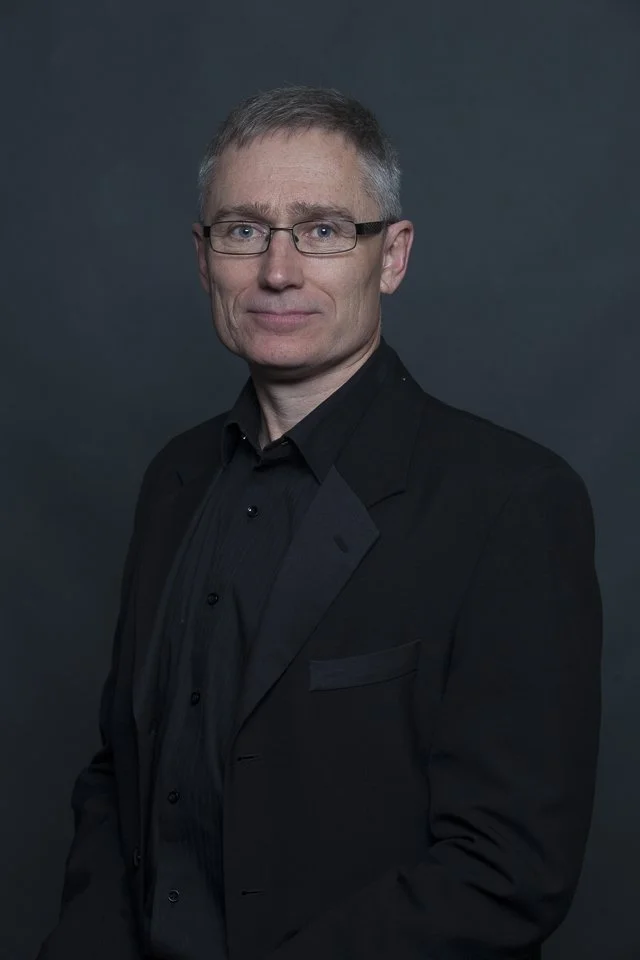
Dr Robert Braham OAM is the Artistic Director of Voyces and has developed a renowned ‘contemporary classical’ choral music ensemble. In recent years, Voyces has focused on an all-Australian program for its debut self-titled CD. Additionally, the ensemble features works from Iceland, Norway, and Finland in its Tundra program. By juxtaposing traditional choral pieces with modern counterparts, they have drawn inspiration from works like Caroline Shaw’s To the Hands.
Robert has toured with Voyces to the 2014 Festival of Voices in Tasmania, the 2015 ANCA Choralfest in Melbourne, and the 2017 ANCA Choralfest in Brisbane, with the choir enjoying significant musical success on all occasions. Robert has also done much to promote Australian choral music through commissioned works. His list of premiered commissioned works includes: Wheatbelt (Iain Grandage, Australian Society for Music education), Let Go of My Hand and Buckley’s (Paul Jarman, Trinity College), Vast Sea, Sleeping Mother (Dan Walker, Orff National Conference), The Hooves of Fate (Dan Walker, Voyces), Ark of My Hopes, Ark of My Dreams (Dan Walker, Trinity/Mercedes Chorale), Canticle of the Word (Andrew Partington, Perth Oratorio Choir), The Wexford Carol (Arr. Stefan Pugliese, Voyces), Sanctus, Benedictus and Agnus Dei (Perry Joyce, Trinity College Senior Chorale), and The Frog Prince (Perry Joyce, Voyces).
As Director of Music at Trinity College Robert conducts the senior school choirs. Notably, these choirs have performed in Sydney, Llangollen, Beijing, New York, Dublin, Belfast, London and Sydney. Robert works as an adjudicator, tutors choral conducting for ACCET at their annual Melbourne summer school and is active with the Australian National Choral Association. In 2017 Robert conducted the Vancouver Chamber Choir as part of their annual symposium, and the Giovanni Consort in a program of modern English repertoire.
For fourteen years Robert was the Musical Director and conductor of the Perth Oratorio Choir where he conducted an extensive range of major choral works with orchestra. He has also prepared Ravel’s Daphnis and Chloe and Beethoven’s Symphony No. 9 for the WASO Chorus. Robert was the founding conductor of the WA Youth Chorale. In 2006 the WAYC won the state final of the ABC FM Sing Out competition and represented WA in the national final.

Noel Ancell OAM has had a long career as conductor, teacher, administrator, musicologist, organist and composer but now, largely retired from the first three activities, he finds himself concentrating on composition. He remains Artistic Director of the National Youth Choir of Australia (NYCA). Previously, he was for 35 years Artistic Director of the Australian Boys Choral Institute, conducting the Australian Boys Choir, the Kelly Gang (teenagers) and The Vocal Consort (adults). His voice studio has produced a number of successful professional singers as well as enthusiastic amateurs. His involvement in church music began as a boy and continued in such positions as Director of Music at St Mary’s Cathedral, Hobart. He was President of the Australian National Choral Association and has conducted as a guest at international festivals including World Alliance Festivals of Singing in the USA and Prague. He was awarded the Medal of the Order of Australia in 2009 for service to choral music.