NYCA 2026 Season - Concert Program
You can support NYCA in many ways...
As with most not-for-profit arts organisations, NYCA heavily relies on donations to provide for the next generation of Australia's brightest young singers. Without these, we are not able to further subsidise singer fees, employ renowned choral conductors, or record our concerts.
Donations will go straight to paying a professional AV engineer to record the 2026 NYCA season finale concert, held at St Andrew's South Brisbane. Closely following the concert, the recording will be edited and released over the coming weeks across our social media and YouTube platforms to showcase the hard work put in by our ambitious young singers! Will you give our recording wings?
The National Choir of Australia (NYCA) is a registered Deductible Gift Recipient (DGR) and all donations over $2 are tax deductible.
Tides of Ocean – Matthew Orlovich (1998)
Text: Victor Carrell (1906-1978)
A number of my earlier works for The Australian Voices have been inspired by the work of the poet-writer Victor Carell. When asked, then, to compose a new score for The Australian Voices to perform during their upcoming overseas tour, I eagerly returned to Carell’s poetry and chose to set his poem entitled “Tides of Ocean”. Carell noted, in writing about the poem, that he came to Australia in 1947 to appear in the musical “Annie Get Your Gun”. He travelled in an ex-Liberty ship named the Marine Phoenix which was one of the first passenger ships after the war. “It was my return home to Australia following ten years absence”, Carell wrote. “I eagerly sought the first sight of the Southern Cross as we dipped south.”
The musical setting of the poem falls broadly into four (continuous) sections. The opening section comprises rhythmic and lively music as the choir sings of standing over “tides of ocean.” There follows a calmer music as the poem carries us into the night with images of moon-paths and flying fish flashes, culminating in a “southward dip” which involves all the tenors and basses descending to their striking lowest registers. The slowly emerging Southern Cross and the excitement of its presence is reflected in the third section of the work by the gradual accretion of voices forming a natural crescendo. Like a frame for the work, the choir returns to the opening music before concluding. Grateful acknowledgment is made of Butterfly Books, Springwood, NSW, Australia, for permission to set Victor Carell’s poem to music.
Matthew Orlovich,
Composer.
I stand over tides of ocean, an eager grace at my feet,
The rhythm of speed surrounds me and my heart throbs with its beat.
The winds play at my nostrils, and clear stars tremble near,
The taut twang of the bowsprit sings music to my ear.
The rhythm of speed surrounds me.
The tumbling waves dash madly in the cauldron far below,
And creaking booms swing sadly obscuring the moonlit glow.
A moon-path stretches ghostly (fish! flash!) across the sea its hand,
And flying fish flash sparks like jewels, in a mirrored band.
Night birds in a flowing lane raucously fly the ship,
As onward, on winged feet we start our southward dip.
And now behold our course, rising from the dark of space,
A cross of gleaming stars reflects the joy upon my face.
My body thrills with life, my spirit wildly bounds,
My soul absorbs the triumph of all these joyous sounds.
I stand over tides of ocean, an eager grace at my feet,
The rhythm of speed surrounds me and my heart throbs with its beat.
I stand over tides of ocean.
Hymn of Ancient Lands – Joe Twist (2016)
Text: Caedmon’s Hymn
Hymn of Ancient Lands is a setting of a fragment of text recorded by Bede known as Caedmon’s Hymn. This poem (or hymn) is thought to be the earliest ever recorded poem written in the language of the Angles, the ‘Old English’ of the Anglo Saxons. Upon this basis Caedmon has been designated the patron saint of poets and poetry. The hymn, in its original Anglo Saxon, as well as Latin and modern English vernacular translations, provided the inspiration for this new musical setting for Stephen Layton and the Choir of Trinity College, Cambridge. The juxtaposition of these three languages expresses my fascination with viewing history and spirituality through a modern lens, fusing the old with the new by paying homage to the ancient poem and reflecting its significance with my own musical ideas. For the commissioners of this work, it is significant that Caedmon, a shy, humble and deeply religious man, through divine inspiration, and with the encouragement of St Hilda of Whitby, was enabled to express God’s love of creation in song.
Caedmon’s Hymn is a universal song in which Caedmon, praises God’s creation of Heaven and Earth, which he calls ‘Middengeard’ (Middle-Earth). Extending upon this, Hymn of Ancient Lands expresses adoration of land and nature through a ritualistic musical journey which progresses from sparse and plaintive to energetic and joyful. From a modern point of view, Hymn of Ancient Lands expresses Australians’ passion for traveling overseas and exploring many different lands, combined with a deep sense of belonging and respect for our own unique and magnificent landscape.
Joseph Twist,
Composer.
Nū sċylun herġan hefænrīċaes Uard,
Metudæs maecti end his mōdġidanc,
uerc Uuldurfadur, suē hē uundra ġihuaes,
ēċi Dryctin ōr āstelidæ.
Hē ǣrist sċōp aelda barnum
heben til hrōfe, hāleġ Sċepen.
Thā middunġeard moncynnæs Uard,
ēċi Dryctin æfter tīadæ
fīrum foldu Frēa allmectiġ.
Nunc laudare debemus auctorem regni caelestis,
potentiam creatoris, et consilium illius facta Patri
gloriae: quomodo ille, cum sit aeternus Deus,
omnium miraculorum auctor exstitit; qui primo
filiis hominum caelum pro culmine tecti dehinc
terram custos humani generis creavit, omnipotens.
Now we shall praise the Guardian of heaven’s
kingdom, the might of the architect, and his
purpose, the work of the father of glory as He, the
eternal lord, established the beginning of wonders.
For the children of men He created heaven.
Rivers of Light – Ēriks Ešenvalds (2013)
Text: Charles Francis Hall (1821–1871), Fridtjof Nansen (1861–1930), and various writings on the Northern Lights compiled by the composer
Rivers of Light might be seen as a companion piece to Northern Lights and, indeed, it revisits some of the same ideas. It has a similar folk-song opening—this time from the Sámi people of Scandinavia (the piece was commissioned by the Swedbank Choir in Riga, Swedbank being a Swedish bank with a big presence in Latvia). This is eventually combined with another Sámi folk song for a male voice over another of Ešenvalds’ ‘eternal’ chorales, and the words of the explorers Fridtjof Nansen and Charles Francis Hall also appear in a kaleidoscope of texts that facilitates a sustained but varied musical vision of light — specifically the Northern Lights — in its many forms.
Kuovsakasah reukarih tåkko teki, sira ria
Tåkko teki Sira ria, sira siraa ria
Guovssat, guovssat radni go, libai libai libaida
Ruoná gákti, nu nu nu
Northern Lights slide back and forth, fa-la-la…
back and forth, fa-la-la…
Northern Lights, Northern Lights, blanket shivering, fa-la-la…
green coat, fa-la-la…
Winter night, the sky is filled with symphony of light.
The sky is flooded with rivers of light.
The doors of heaven have been opened tonight.
From horizon to horizon misty dragons swim through the sky.
Green curtains billow and swirl, fast-moving, sky-filling, the tissues of gossamer.
Nothing can be heard.
Light shakes over the vault of heaven, its veil of glittering silver:
changing now to yellow, now to green, now to red.
It spreads in restless change, into waving, into many-folded bands of silver.
It shimmers in tongues of flame.
Over the very zenith it shoots a bright ray up
until the whole melts away as a sigh of departing soul in the moonlight,
leaving a glow in the sky like the dying embers of a great fire.
After All – Tim Mallis (b.1996)
(Winner, Ralph Morton Memorial Competition 2026)
Text: Henry Lawson (1867-1922)
While Henry Lawson is best known for his laconic humour and unsparing portraits of hardship, ‘After All’ reveals a more introspective meditation on hope, regret, and perseverance. This setting for SATB double choir opens with a wind-like call evoking the Australian outback, gradually giving way to Lawson’s reflections on life. The music traces the text’s shifting balance between guarded optimism and quiet doubt, framed by recurring statements of the unifying refrain, ‘after all’. This work offers singers the opportunity to explore a wide range of textures across eight vocal parts with a brief tenor duet in the final stanza. The double choir voicing functions as a broad palette for tutti unisons, intricate polyphony, thick harmonic devices, and pairings across voice types.
The brooding ghosts of Australian night have gone from the bush and town;
My spirit revives in the morning breeze, though it died when the sun went down;
The river is high and the stream is strong, and the grass is green and tall,
And I fain would think that this world of ours is a good world after all.
The light of passion in dreamy eyes, and a page of truth well read,
The glorious thrill, in a heart grown cold, of the spirit I thought was dead,
A song that goes to a comrade’s heart, and a tear of pride let fall—
And my soul is strong! and the world to me is a grand world after all!
Let our enemies go by their old dull tracks, and theirs be the fault or shame
(The man is bitter against the world who has only himself to blame);
Let the darkest side of the past be dark, and only the good recall;
For I must believe that the world, my dear, is a kind world after all.
It well may be that I saw too plain, and it may be I was blind;
But I’ll keep my face to the dawning light, though the devil may stand behind!
Though the devil may stand behind my back, shall I see his shadow fall?
I’ll read in the light of the morning stars — a good world after all.
Rest, for your eyes are weary, girl — you have driven the worst away —
The ghost of the man that I might have been is gone from my heart to-day;
We’ll live for life and the best it brings till our twilight shadows fall;
My heart grows brave, and the world, my girl, is a good world after all.
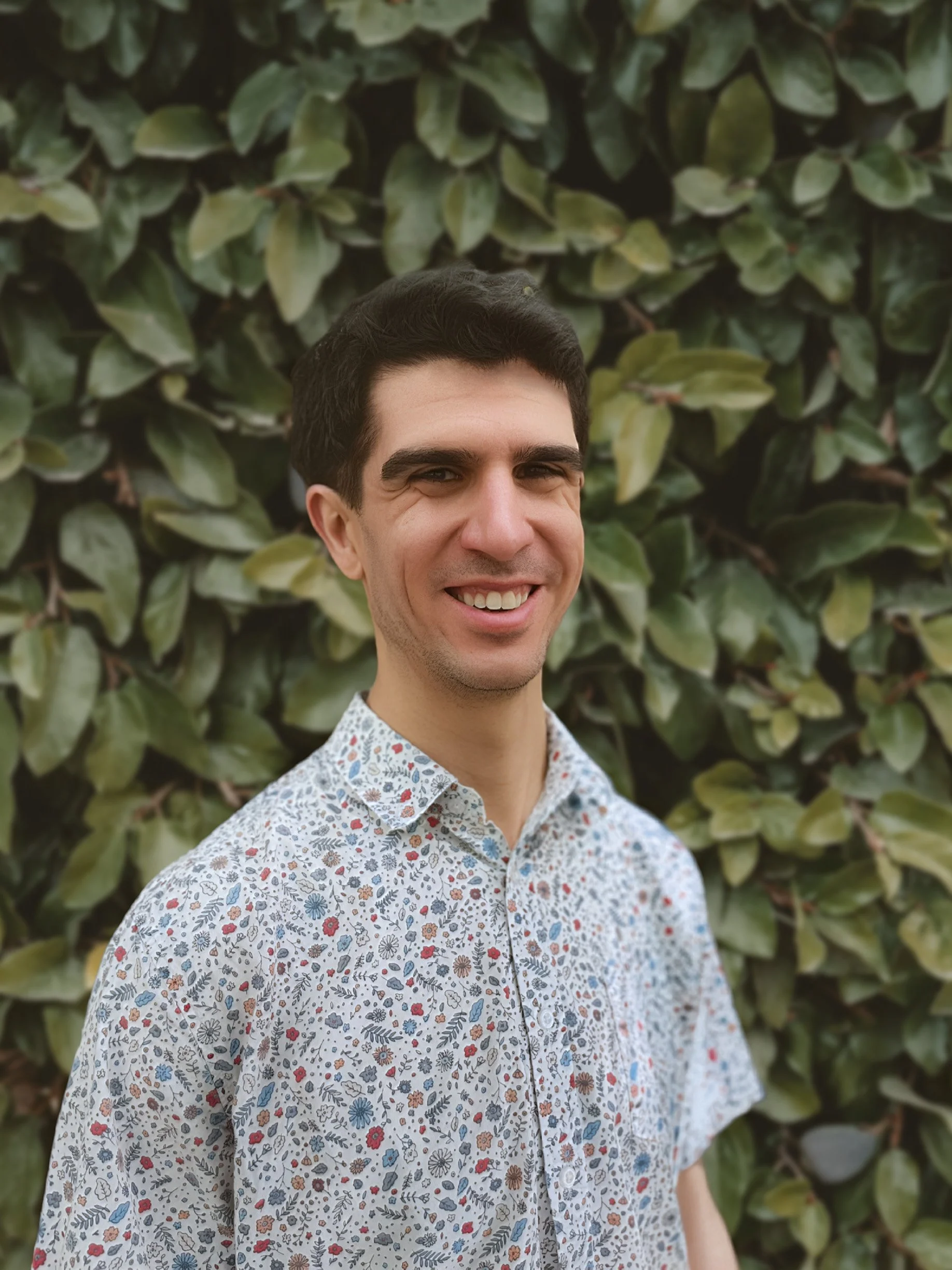
Tim Mallis is recognised as one of Melbourne’s leading collaborative pianists and composers. He is a steadfast supporter of music education and committed to bringing new Australian compositions to life. As a graduate of the Melbourne Conservatorium of Music, Tim is in high demand as an accompanist, organist, and conductor. He has written for some of Australia’s finest ensembles including Sinfonia Australis, The Vocal Consort, and St Mary’s Cathedral Choir. Tim was the recipient of the 2019 Archbishop’s Prize for New Composers and is a graduate of the Franz-Schubert-Institut studying German Lieder. Specialising in choirs, Tim is the current Assistant Artistic Director of the Australian Boys Choral Institute and works with The Yarra Voices. Among his most recent roles, he was the Associate Director of Music at St Andrew’s Anglican Church and is the current repetiteur for the Melbourne Symphony Orchestra Chorus. Tim is passionate about educating the next generation of musicians. His work at The University of Melbourne, Victorian College of the Arts Secondary School, and Camberwell Girls Grammar School has covered a variety of fields including musicianship, music theory, composition, and choral accompaniment. He is also employed by Opera Australia and Victorian Opera as a surtitle specialist.
So Let Us Melt – Jessica Curry (2017)
Text: John Donne (1572-1631)
So Let Us Melt by Jessica Curry sets a text by seventeenth-century poet John Donne, drawing on his meditation on love, separation, and spiritual connection. The title comes from Donne’s poem A Valediction: Forbidding Mourning, in which he argues that a deep bond can endure physical distance without loss or grief.
The work is characterised by sustained vocal lines and carefully layered harmonies that allow the text to unfold naturally. Rather than relying on dramatic contrasts, Curry builds the piece through gradual changes in texture and intensity, reflecting the poem’s quiet confidence and sense of unity.
So let us melt, and make no noise,
No tear-floods, nor sigh-tempests move;
'Twere profanation of our joys
To tell the laity our love.
Moving of the earth brings joys and fears,
Careless, eyes, lips, and hands to miss.
Our two souls, which are one.
Though I must go, endure not yet
A breach, but an expansion, Like gold
Such wilt thou be to me.
Thy soul comes home.
though I must go.
And the Swallow – Caroline Shaw (2017)
Text: Psalm 84
And the Swallow (2017) by Caroline Shaw is a setting of verses from Psalm 84, inspired by the image of a swallow finding a safe place to build its nest. The work reflects themes of home, refuge, and belonging, drawing connections between the psalm’s ancient text and contemporary experiences of displacement and longing for safety.
Shaw’s characteristic musical language combines luminous harmonies, flowing vocal lines, and vivid sound imagery. Moments of wordless singing evoke the movement of birds and elements of the natural world, creating an atmosphere that is both intimate and expansive. Though brief in duration, And the Swallow offers a powerful meditation on hope, renewal, and the universal search for a place to call home.
How beloved is your dwelling place,
o lord of hosts,
my soul yearns, faints,
my heart and my flesh cry out.
The sparrow found a house,
and the swallow her nest,
where she may raise her young.
They pass through the Valley of Bakka,
they make it a place of springs;
the autumn also covers it with pools.
Dum medium silentium – Vytautas Miškinis (2008)
Text: Book of Wisdom (18:14–15)
Dum medium silentium by Vytautas Miškinis is written for eight-part choir and draws on the tradition of Gregorian chant alongside Lithuanian folk influences. The work is built from simple melodic and harmonic material, including stepwise motion, open intervals, and small added-note harmonies that expand the texture without obscuring its tonal basis.
Miškinis contrasts sustained, chant-like passages with more rhythmically active writing, often layering different rhythmic groupings across the voices. Sections of homophony emerge from these overlapping lines, creating moments of clarity within a shifting polyphonic texture. The use of repetition and gradual harmonic change gives the work a sense of continuity while allowing the text to shape pacing and articulation.
Dum medium silentium tenerent omnia,
et nox in suo cursu medium iter haberet,
omnipotens sermo tuus, Domine,
de caelis a regalibus sedibus venit.
While all things were in quiet silence,
and the night was in the midst of her course,
Thy almighty word, O Lord,
came down from heaven from thy royal throne.
The City and the Sea – Eric Whitacre (2009)
Text: Edward Estlin Cummings (1894-1962)
The City and the Sea is a set of five settings of poems by e.e. cummings originally written for SATB chorus and piano, and subsequently solo baritone and piano. The entire set is based on white key clusters in the piano referred to as the ‘oven-mitt’ technique, because the chords are played as if you are wearing mitts on your hands – the four fingers all bunched together and the thumb on its own. Each movement presents a different scene and emotional character. From the calmer and reflective atmospheres to the curious sense of wonder, the cycle explores a range of moods before concluding with little man in a hurry, a lively and energetic setting whose rhythmic drive provides a sharp contrast to the preceding movements. Throughout the work, Whitacre responds closely to the character of each poem, shaping the music around the changing emotions and imagery of the text.
1. i walked the boulevard
i walked the boulevard
i saw a dirty child
skating on noisy wheels of joy
pathetic dress fluttering
behind her a mother monster with red grumbling face
cluttered in pursuit pleasantly elephantine
while nearby the father a thick cheerful man
with majestic bulbous lips and forlorn piggish hands
joked to a girlish whore with busy rhythmic mouth and silly purple eyelids
of how she was with child
2. the moon is hiding in her hair
the moon is hiding in her hair.
The lily of heaven full of all dreams, draws down.
cover her briefness in singing close her with intricate faint birds by daisies and twilights Deepen her,
Recite upon her flesh the rain’s pearls singly-whispering.
3. maggie and milly and molly and may
maggie and milly and molly and may went down to the beach (to play one day)
and maggie discovered a shell that sang so sweetly she couldn’t remember her troubles,
and milly befriended a stranded star whose rays five languid fingers were;
and molly was chased by a horrible thing which raced sideways while blowing bubbles:
and may came home with a smooth round stone as small as a world and as large as alone.
for whatever we lose (like a you or a me) it’s always ourselves we find in the sea
4. as is the sea marvelous
as is the sea marvelous
from god’s hands which sent her forth to sleep upon the world
and the earth withers
the moon crumbles
one by one stars flutter into dust
but the sea does not change
and she goes forth out of hands and she returns into hands
and is with sleep....
love,
the breaking of your soul upon my lips
5. little man in a hurry
little man (in a hurry full of an important worry)
halt stop forget relax wait
little child who have tried
who have failed who have cried
lie bravely down sleep
big rain big snow big sun bug moon hurry enter us
Come to the Woods – Jake Runestad (2015)
Text: John Muir (1838-1914)
Come to the Woods explores John Muir’s inspirations and the transporting peace found in the natural world. Using a collage of fragments from Muir’s writings, the work ventures from the boisterous joy of a “glorious day,” to the quiet whispering of wind, to the rejuvenating power of a storm, to the calming “amber light” when the clouds begin to clear. I hope it captures the selfdiscovery and sustenance one encounters while exploring the outdoors and its vital importance in our lives.
Jake Runestad,
Composer.
Another glorious day, the air as delicious
to the lungs as nectar to the tongue.
The day was full of sparkling sunshine,
and at the same time enlivened with one of
the most bracing wind storms.
The mountain winds bless the forests with love.
They touch every tree, not one is forgotten.
When the storm began to sound,
I pushed out into the woods to enjoy it.
I should climb one of the trees for a wider look.
The sounds of the storm were glorious with
wild exuberance of light and motion.
Bending and swirling backward and forward, round and round,
in this wild sea of pines.
The storm-tones died away, and turning toward the east,
I beheld the trees, hushed and tranquil.
The setting sun "lled them with amber light, and seemed to say,
“Come to the woods, for here is rest.”
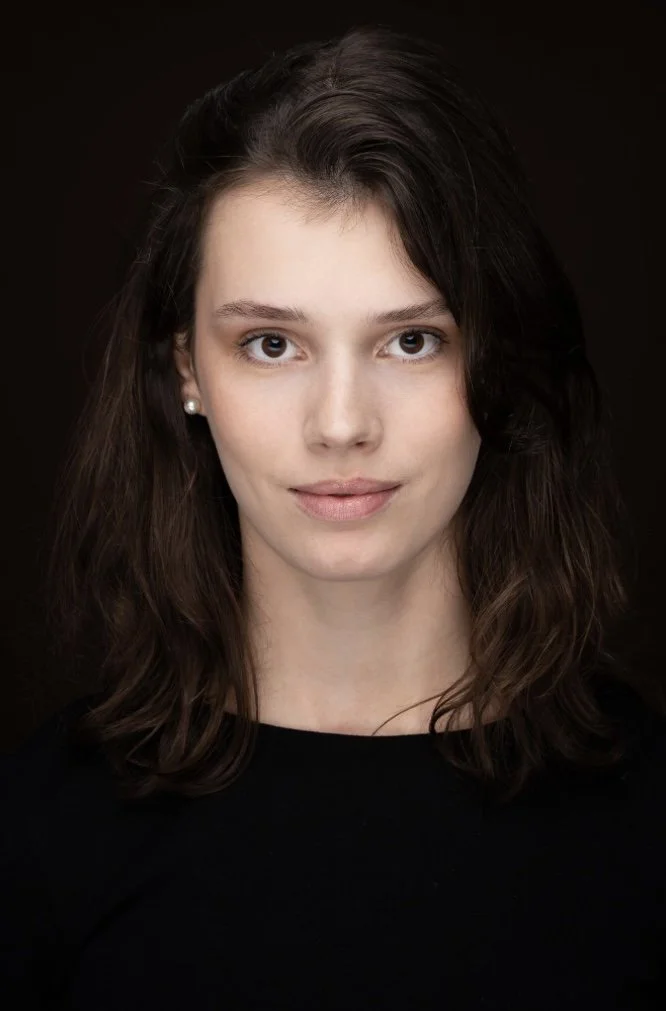
Feodora is a young German-Australian pianist, currently employed with Queensland Ballet (QB) in Brisbane, Australia. She began studying piano at age 5 and was awarded an LMusA with distinction at the age of 15. In 2019, she auditioned for and was accepted into the Rising Stars Program at the Sydney Conservatorium of Music and in 2024 she completed her Bachelor of Music at The University of Queensland (UQ) under the tuition of Dr Anna Grinberg. During her studies, Feodora was awarded prizes and scholarships at the University in recognition of her work as a soloist and collaborative pianist and has featured in performances at the Coramba Chamber Music Festival, Bellingen Fine Music Festival, Bangalow Chamber Music Festival and Queensland Art Song Festival. She was selected to perform alongside the Southern Cross Soloists as part of their Next Gen Program 2023/24 and toured various programs to Gold Coast, Bangalow, Brisbane and regional Queensland. In October 2024 Feodora accepted a contract with QB and through her work, playing for daily ballet classes and rehearsals, has developed a passion for ballet pianism. To date she enjoys playing for ballet rehearsals and classes for the company in a full time capacity, as the 2025/2026 Kathleen Lott Ballet Piano Fellow. Most recent performances include playing alongside QSO, as part of QB’s production of Ben Stevensons Nutcracker. Outside of ballet work, Feodora enjoys teaching, producing her own concerts and performing as a chamber musician and collaborative pianist.
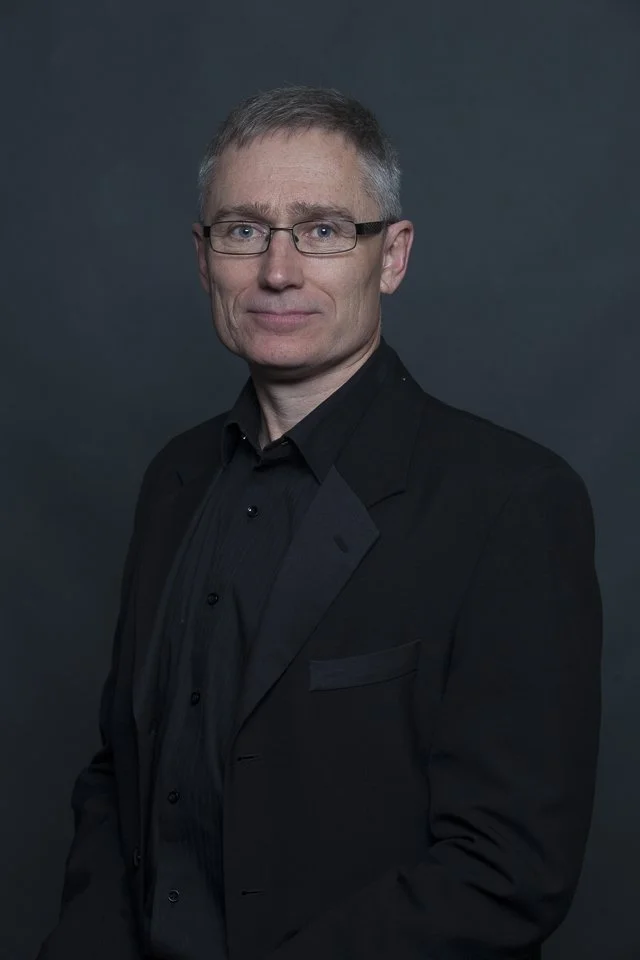
Dr Robert Braham OAM is the Artistic Director of Voyces and has developed a renowned ‘contemporary classical’ choral music ensemble. In recent years, Voyces has focused on an all-Australian program for its debut self-titled CD. Additionally, the ensemble features works from Iceland, Norway, and Finland in its Tundra program. By juxtaposing traditional choral pieces with modern counterparts, they have drawn inspiration from works like Caroline Shaw’s To the Hands.
Robert has toured with Voyces to the 2014 Festival of Voices in Tasmania, the 2015 ANCA Choralfest in Melbourne, and the 2017 ANCA Choralfest in Brisbane, with the choir enjoying significant musical success on all occasions. Robert has also done much to promote Australian choral music through commissioned works. His list of premiered commissioned works includes: Wheatbelt (Iain Grandage, Australian Society for Music education), Let Go of My Hand and Buckley’s (Paul Jarman, Trinity College), Vast Sea, Sleeping Mother (Dan Walker, Orff National Conference), The Hooves of Fate (Dan Walker, Voyces), Ark of My Hopes, Ark of My Dreams (Dan Walker, Trinity/Mercedes Chorale), Canticle of the Word (Andrew Partington, Perth Oratorio Choir), The Wexford Carol (Arr. Stefan Pugliese, Voyces), Sanctus, Benedictus and Agnus Dei (Perry Joyce, Trinity College Senior Chorale), and The Frog Prince (Perry Joyce, Voyces).
As Director of Music at Trinity College Robert conducts the senior school choirs. Notably, these choirs have performed in Sydney, Llangollen, Beijing, New York, Dublin, Belfast, London and Sydney. Robert works as an adjudicator, tutors choral conducting for ACCET at their annual Melbourne summer school and is active with the Australian National Choral Association. In 2017 Robert conducted the Vancouver Chamber Choir as part of their annual symposium, and the Giovanni Consort in a program of modern English repertoire.
For fourteen years Robert was the Musical Director and conductor of the Perth Oratorio Choir where he conducted an extensive range of major choral works with orchestra. He has also prepared Ravel’s Daphnis and Chloe and Beethoven’s Symphony No. 9 for the WASO Chorus. Robert was the founding conductor of the WA Youth Chorale. In 2006 the WAYC won the state final of the ABC FM Sing Out competition and represented WA in the national final.

Noel Ancell OAM has had a long career as conductor, teacher, administrator, musicologist, organist and composer but now, largely retired from the first three activities, he finds himself concentrating on composition. He remains Artistic Director of the National Youth Choir of Australia (NYCA). Previously, he was for 35 years Artistic Director of the Australian Boys Choral Institute, conducting the Australian Boys Choir, the Kelly Gang (teenagers) and The Vocal Consort (adults). His voice studio has produced a number of successful professional singers as well as enthusiastic amateurs. His involvement in church music began as a boy and continued in such positions as Director of Music at St Mary’s Cathedral, Hobart. He was President of the Australian National Choral Association and has conducted as a guest at international festivals including World Alliance Festivals of Singing in the USA and Prague. He was awarded the Medal of the Order of Australia in 2009 for service to choral music.